TRUCKING

PROGRAMS

Explore our trucking school programs today and steer your future towards success! Don't wait, the open road is calling

Main Office:

6230 Hackett Rd, Freeland, MI 48623

Call us now :

(989)341-4300

Entry-Level Driver Training

(ELDT)

What is ELDT?

Entry-Level Driver Training (ELDT) is a federal regulation issued by the Federal Motor Carrier Safety Administration (FMCSA). It establishes the minimum training standards for new commercial drivers and has been in effect since February 7, 2022.

About the ELDT Regulations

FMCSA’s Entry Level Driver Training (ELDT) regulations set the baseline for training requirements for entry-level drivers. This applies to those seeking to:

Obtain a Class A or Class B CDL for the first time;

Upgrade an existing Class B CDL to a Class A CDL; or

Obtain a school bus (S), passenger (P), or hazardous materials (H) endorsement for the first time.

The ELDT regulations are not retroactive; individuals who were issued a CDL or an S, P, or H endorsement prior to February 7, 2022 are not required to complete training for the respective CDL or endorsement.

If an applicant who obtained a CLP prior to February 7, 2022, and obtains a CDL before the CLP or renewed CLP expires, the applicant is not subject to the ELDT requirements.

Any individual who meets one of the exceptions for taking a skills test in 49 CFR Part 383 is also exempt from the ELDT requirements.

How to get ELDT for A CDL

To get ELDT (Entry-Level Driver Training) for a CDL, you must find a provider from the Federal Motor Carrier Safety Administration’s (FMCSA) Training Provider Registry (TPR), the official list of approved providers. After enrolling, you must complete both the theoretical and practical, behind-the-wheel portions of the training, with the theory often being online and the practical being in-person. Once training is complete, the provider will submit your certification to the FMCSA, allowing you to proceed with the CDL skills test.

Components of ELDT Training

ELDT consists of two parts:

  • ELDT theory training covers a broad curriculum including basic vehicle operation, safe operating procedures, advanced operating practices, vehicle systems and reporting malfunctions, non-driving activities, and specific topics like whistleblower and coercion protections, and depending on the class, includes endorsement-specific content for hazmat, passenger, or school bus drivers. The goal is to provide new commercial drivers with the essential knowledge needed to safely operate a commercial vehicle. 
  • (ELDT) behind-the-wheel (BTW) curriculum focuses on practical, hands-on driving skills that a commercial driver needs to operate a vehicle safely. The BTW curriculum is divided into two sections, which cover skills learned on a closed course (range) and on public roads (road).

Behind-the-wheel (BTW) Range Training

On the range, you will be taught and required to demonstrate proficiency in basic vehicle control, including: 

  • Inspections: Pre- and post-trip inspections.
  • Basic maneuvers: Controlling the motion of the vehicle, shifting gears, and backing and docking.
  • Coupling and uncoupling: For Class A CDL applicants only.

Behind-the-wheel (BTW) Road Training

On the road, you will practice more advanced driving procedures under various conditions. The curriculum includes: 

  • Vehicle control: Managing vehicle speed and space.
  • Communication: Interacting with other road users.
  • Visual search: Checking your mirrors and looking for potential hazards.
  • Conditions: Driving safely at night and in extreme weather conditions.
  • Emergency maneuvers: Responding to potential hazards and dealing with emergencies like skids, brake failure, and tire blowouts.
  • Railroad crossings: Understanding the procedures for safely navigating railroad-highway grade crossings.
  • Advanced practices: Skills to recognize and handle a vehicle when faced with a hazard

FAQ'S

When are classes? – Everybody except HazMat

Classes run year-round, usually with two start dates each month. Training is Monday–Friday, 8:00 a.m.–4:30 p.m., with a half-hour lunch break. Classes are small (3 students per instructor) and fill on a first-come, first-served basis, so give us a call for the most up-to-date availability.


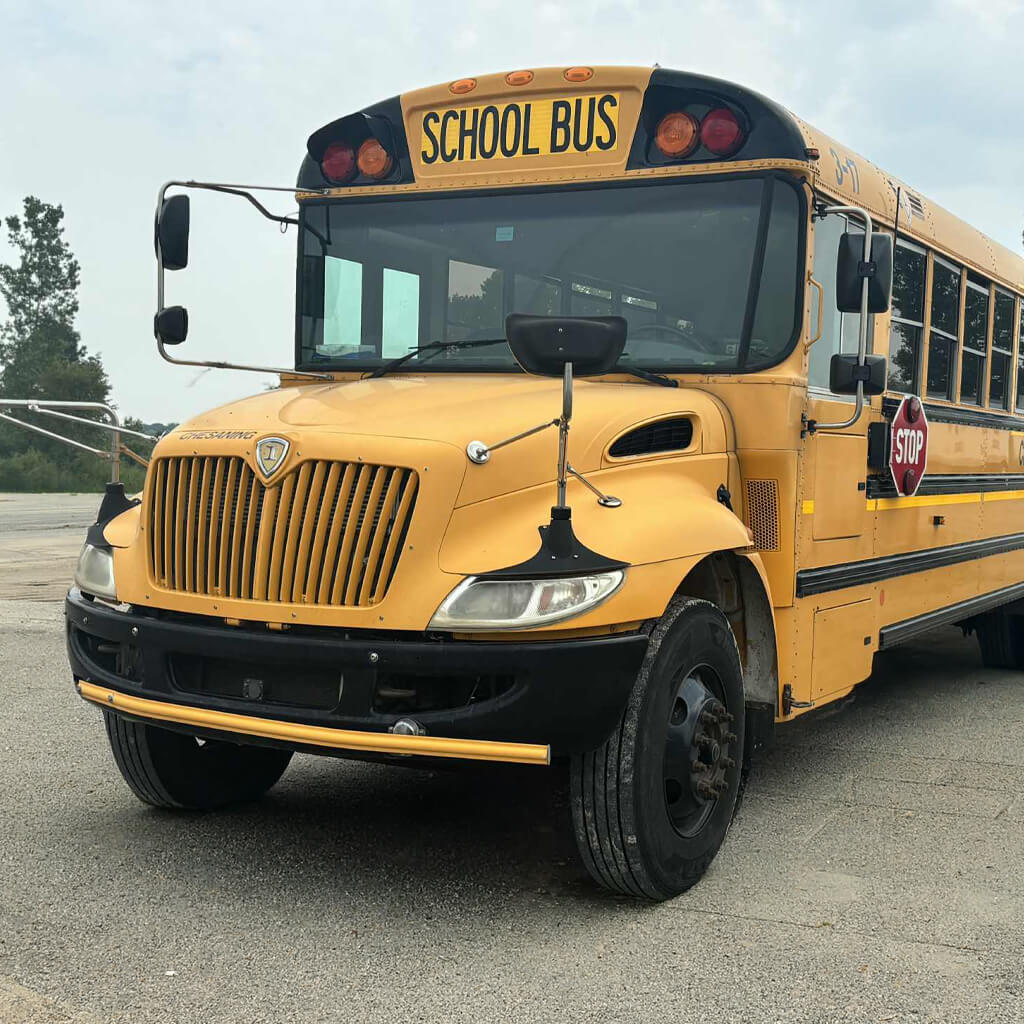
How long is the training course? – Class A, B, Passenger, & School Bus

All courses run Monday–Friday, 8:00 a.m.–4:30 p.m., including a half-hour lunch.

Class A:

  • 3 Week (160 hours total): 3 weeks in class (120 hours) plus 40 hours of at-home study. Students are assigned the JJ Keller Entry-Level Driver’s Training – Obtaining a CDL book (534 pages) and complete 100 randomly selected questions. This program includes ELDT theory and hands-on behind-the-wheel instruction.
  • 2 Week (80 hours) – Accelerated: Behind-the-wheel training only. Students must have completed ELDT theory training from an approved provider and provide a Certificate of Completion and Training Record from the FMCSA TPR website (https://tpr.fmcsa.dot.gov/check).
  • 1 Week (40 hours) – Accelerated: Behind-the-wheel training only. ELDT theory must already be completed.

Class B, Passenger (P), & School Bus (S):

  • 5 Day (40 hours): Full program including ELDT theory and hands-on behind-the-wheel instruction.
  • 3 Day (24 hours) – Accelerated: Behind-the-wheel training only. Students must provide ELDT Certificate of Completion and Training Record from the FMCSA TPR website.

What is the difference between the 3 Week, 2 Week, and 1 Week Class A programs? – Class A 1,2 and 3

The main difference is theory training vs. behind-the-wheel training.

  • The 3-week Class A program includes ELDT theory and hands-on behind-the-wheel instruction.
  • The 1- and 2-week accelerated programs are behind-the-wheel training only.
  • Students must have completed ELDT theory training before enrolling.
  • A Certificate of Completion and FMCSA Training Record must be provided.
  • Accelerated programs satisfy only the hands-on ELDT requirement.

What is the difference between the 5 Day and 3 Day Class B, Passenger, & School Bus programs?

The main difference is theory training vs. behind-the-wheel training.

  • The 5-day programs include ELDT theory and hands-on instruction.
  • The 3-day accelerated programs are behind-the-wheel training only.
  • Students must provide ELDT Certificate of Completion and Training Record.
  • These programs satisfy only the hands-on ELDT requirement.

How much does CDL training cost?

  • Class A – 3 Week: $5,200
  • Class A – 2 Week: $3,900
  • Class A – 1 Week: $1,950
  • Class B – 5 Day: $2,200
  • Class B – 3 Day: $2,200

Do you accept GI Bill® or veteran-specific funding?

We don’t accept GI Bill® or other veteran education benefits because our CDL programs are short-term and not VA-approved.

However, many veteran students successfully use Michigan Works grants, workforce development funding, or private financing to cover tuition.


Where can I get a DOT physical and drug test?

All CDL students must complete a DOT physical exam and drug test before starting training. You can obtain these through:

  • DOT-certified medical examiners (FMCSA National Registry)
  • Local urgent care or occupational health clinics
  • Your family doctor or DOT-certified chiropractor

If prior authorization is required, call our office and we will provide the necessary form.


Do you offer additional endorsements or specialized training?

Yes. We provide training for HazMat, Passenger (P), School Bus (S), and Tanker endorsements. We can also create customized training programs for employers.


What is ELDT?

Entry-Level Driver Training (ELDT) is a federal FMCSA regulation establishing minimum training standards for new commercial drivers.

ELDT applies if you are:

  • Obtaining a Class A or Class B CDL for the first time
  • Upgrading a Class B CDL to Class A
  • Getting a School Bus (S), Passenger (P), or HazMat (H) endorsement

Important:

  • ELDT is not retroactive if your CDL was earned before February 7, 2022.
  • If your CLP was issued before February 7, 2022 and you obtain your CDL before it expires, ELDT does not apply.
  • Certain exemptions under 49 CFR Part 383 may apply.

Where are your schools located?

We have multiple locations across Michigan so you can choose the campus closest to you. We’re also expanding into new areas, so keep an eye out for Regen Trucking School coming to your city.


LOCATIONS


Are accommodations provided during training?

We do not provide on-site housing, but we can help you locate nearby accommodations for each campus.


Are meals included?

Students provide their own meals. Most campuses are 3–5 miles from restaurants. The Freeland campus includes a full-size kitchen, and most locations offer a common area with a microwave, refrigerator, and water refill station.


How do I sign up?

Call us at 989-341-4300 or fill out our online form and a representative will contact you.

Important: Students registering through one of our college partnership locations must first complete enrollment with the college before registering with Regen.

We’re excited to help you start your CDL journey!

GET STARTED

Have Questions Give Us A Call

989.341.4300

TRUCKING

PROGRAMS

Explore our trucking school programs today and steer your future towards success! Don't wait, the open road is calling